
A place changed by an action
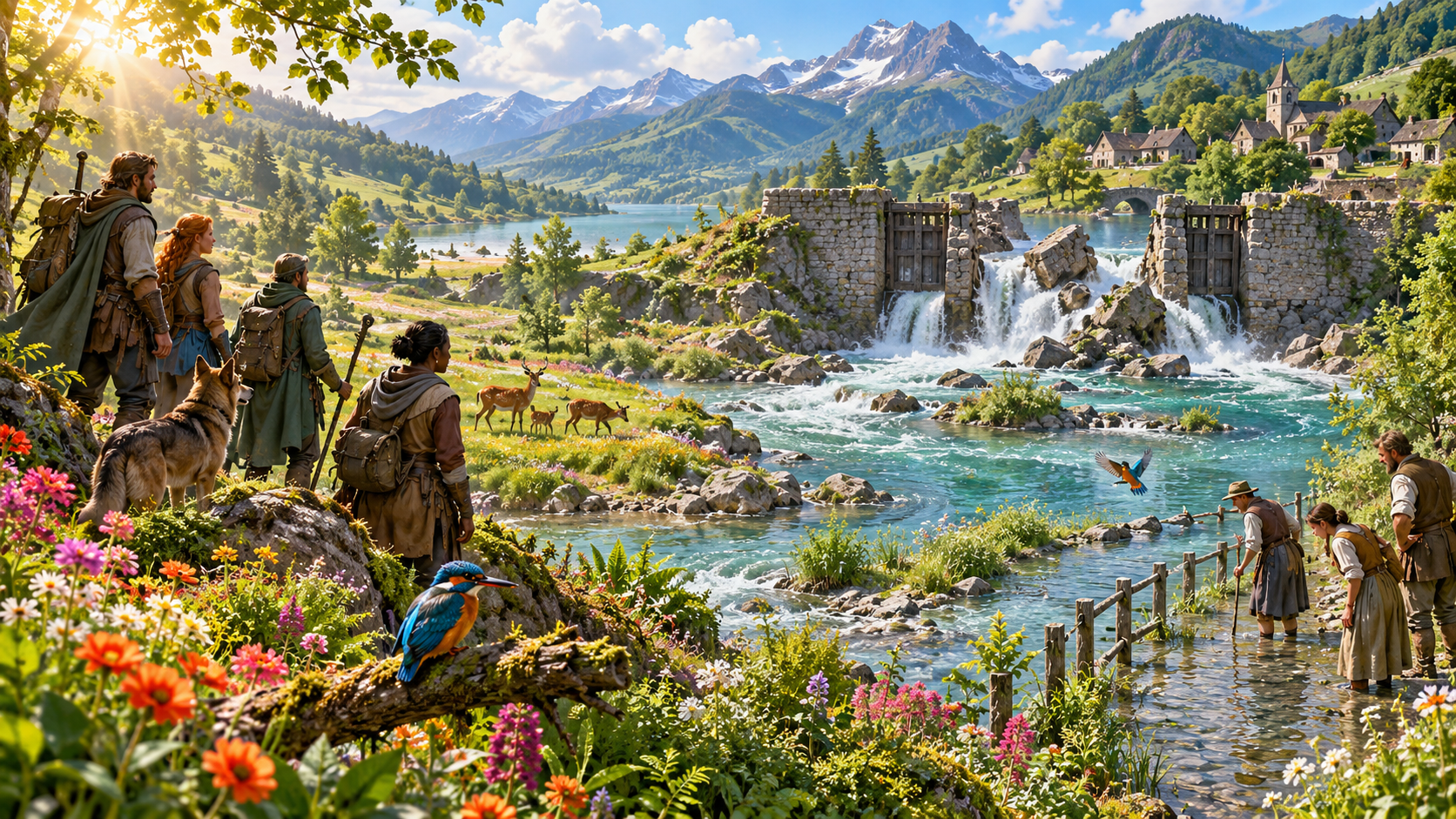
A party and local people observe a river passing through a broken stone watergate, with deer and birds beside the banks. Give your action a place and a natural aftermath.
World & settlement
One party action.
A changed landscape.
Stories in its aftermath.
The landscape remembers
Follow one established action through the place, wildlife and people it affects.
A party and local people observe a river passing through a broken stone watergate, with deer and birds beside the banks. Give your action a place and a natural aftermath.
Prepare the first signs, creature responses, affected people and duration. Keep the meaning for the party beside two hooks and practical tips.
Water, wildlife and the village
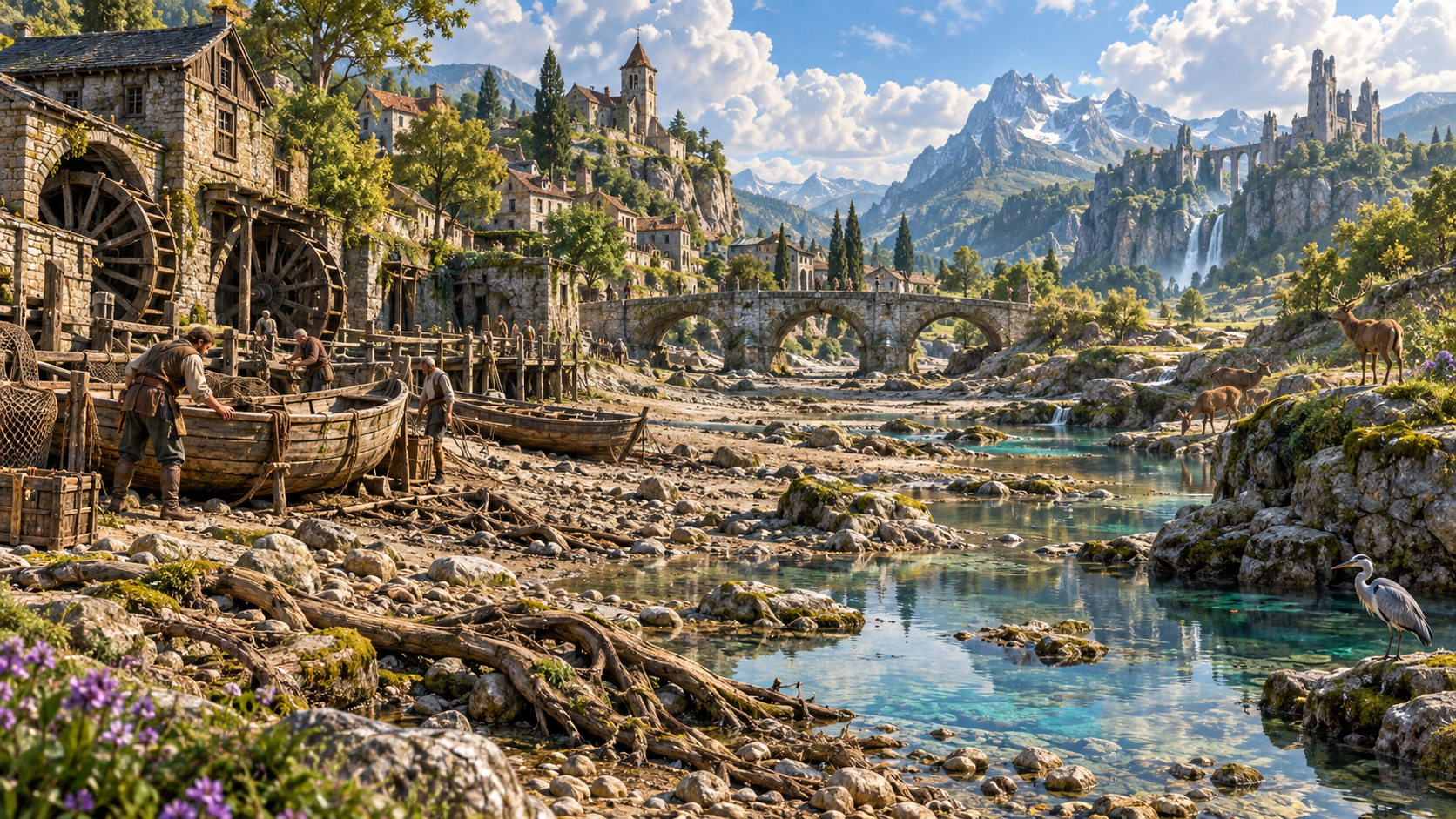
Low river water leaves boats grounded beside village watermills. Deer and a heron share the banks below a stone bridge.
Choose a natural change and its first signs. Connect the landscape, wildlife and people to one established party action.
What you can prepare
Build a useful landscape account with details you can revise for your campaign.
Name the affected place and the party, then describe one established action. Keep the cause beside its consequences.
Choose one of six scales, from a small disturbance or local change to a wounded landscape, regional upheaval or transformed land.
Explore blight, overgrowth, migrating creatures, changed waters, strange weather, bolder predators, wild magic or healing.
Decide what the party first sees across fields, forests, rivers, hills, roads, wells, sky or ground.
Describe how creatures respond to the change and how the wild treats the party when they return.
Keep the affected people beside the landscape. Show what the change means for those who live and work there.
Review how long the change lasts and what it means for the party. Keep two story hooks and practical tips ready for play.
Supply a deeper local event, things to avoid and private Dungeon Master context. Tailor the result to your campaign.
Edit or reroll individual sections, lock favourites, save earlier versions, duplicate the record and add tags or notes.
Copy, download JSON or print the Dungeon Master or player material. Review the selected view and private context before sharing.
A valley, its wildlife and a field journal
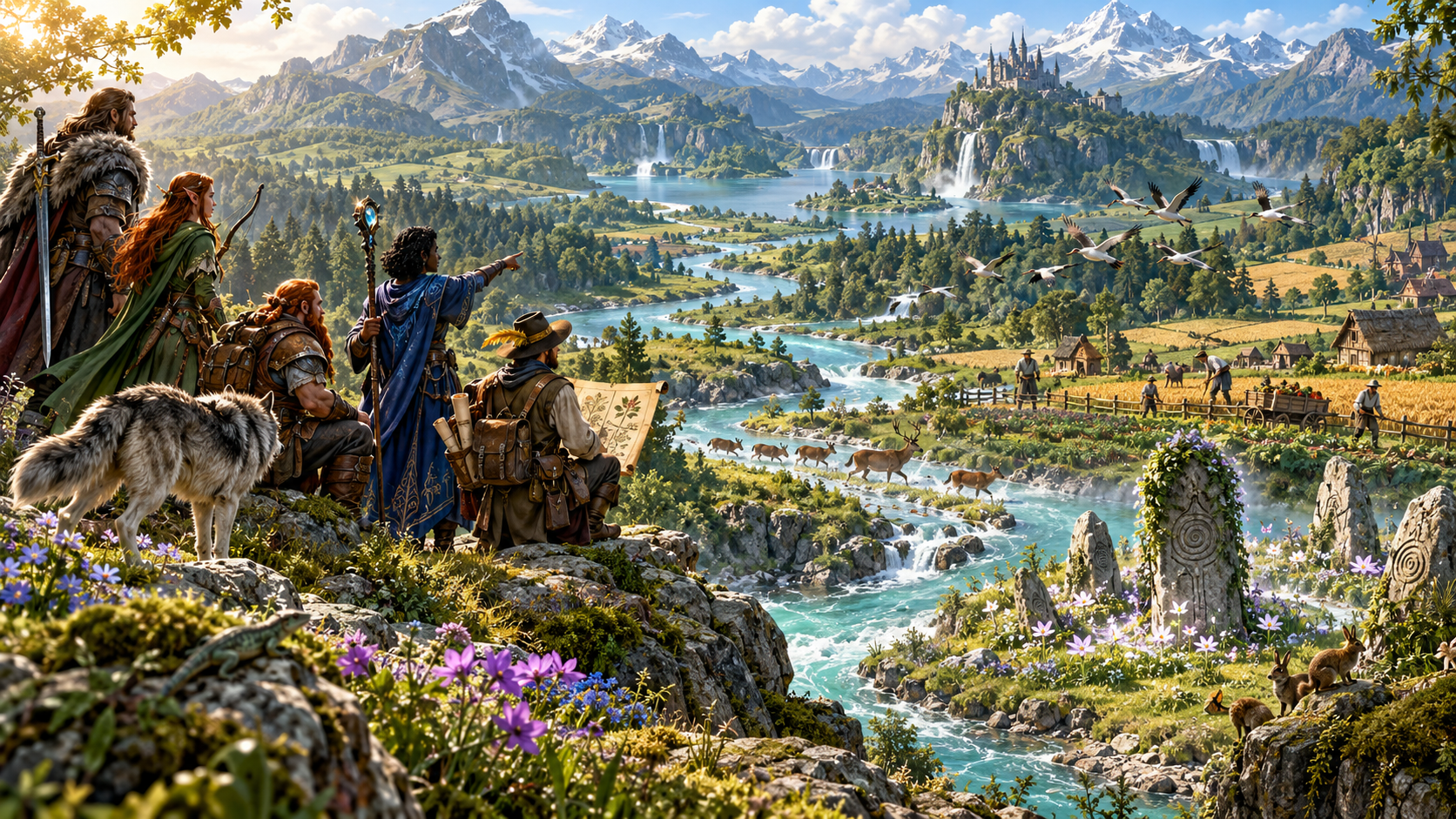
A party surveys a river valley with migrating birds, deer and farmers, keeping an open plant journal beside the view.
Name the place and party. Add their action, reach and tone, then review the signs, creatures, people and duration.
Quick setup. Deeper preparation.
Keep the established action at the centre of the account.
Put the place name first in its description. Name party members and describe the action whose natural consequences you want to prepare.
Set one of six scales and the tone. Select the natural change and what the party first notices when they return.
Supply campaign context, things to avoid and private Dungeon Master material. Edit the result so it fits the place and your table.
Reroll individual sections, lock favourites and save earlier versions. Duplicate records and use tags or notes to keep your references organised.
Maps, tracks, leaves and river samples
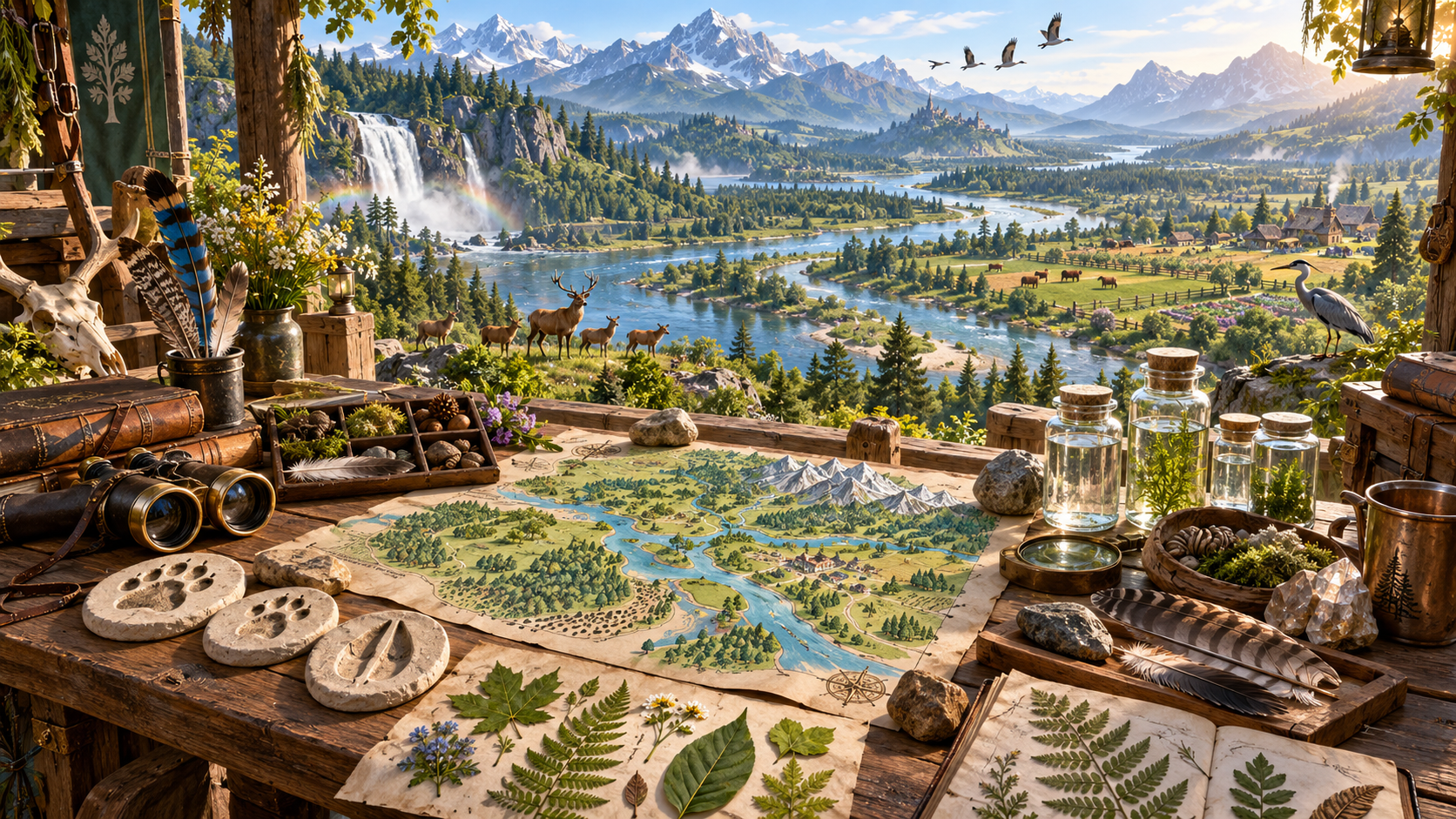
A table holds a valley map, animal-track casts, pressed leaves and water samples overlooking the river, wildlife and farms.
Review landscape signs, creature responses and affected people. Keep duration, party consequences and two hooks ready for the next visit.
Saved accounts and table references
Review your chosen view before sharing it with the table.
Keep place, action, signs, wildlife, people, duration and hooks together. Save earlier versions and duplicate a record for another use.
Edit or reroll individual sections and lock favourites. Add tags and notes to make the account easy to find again.
Choose complete Dungeon Master material or the player account. Private notes and Dungeon Master context are omitted from the player account; review the selected view.
Copy the chosen material, download JSON or print a table reference. Check its details and private context before passing it to players.
Your desktop and related products
Open your products through your account and bring the chosen account to the table.

Open your VISINVOKE products through one signed-in Windows desktop workspace.
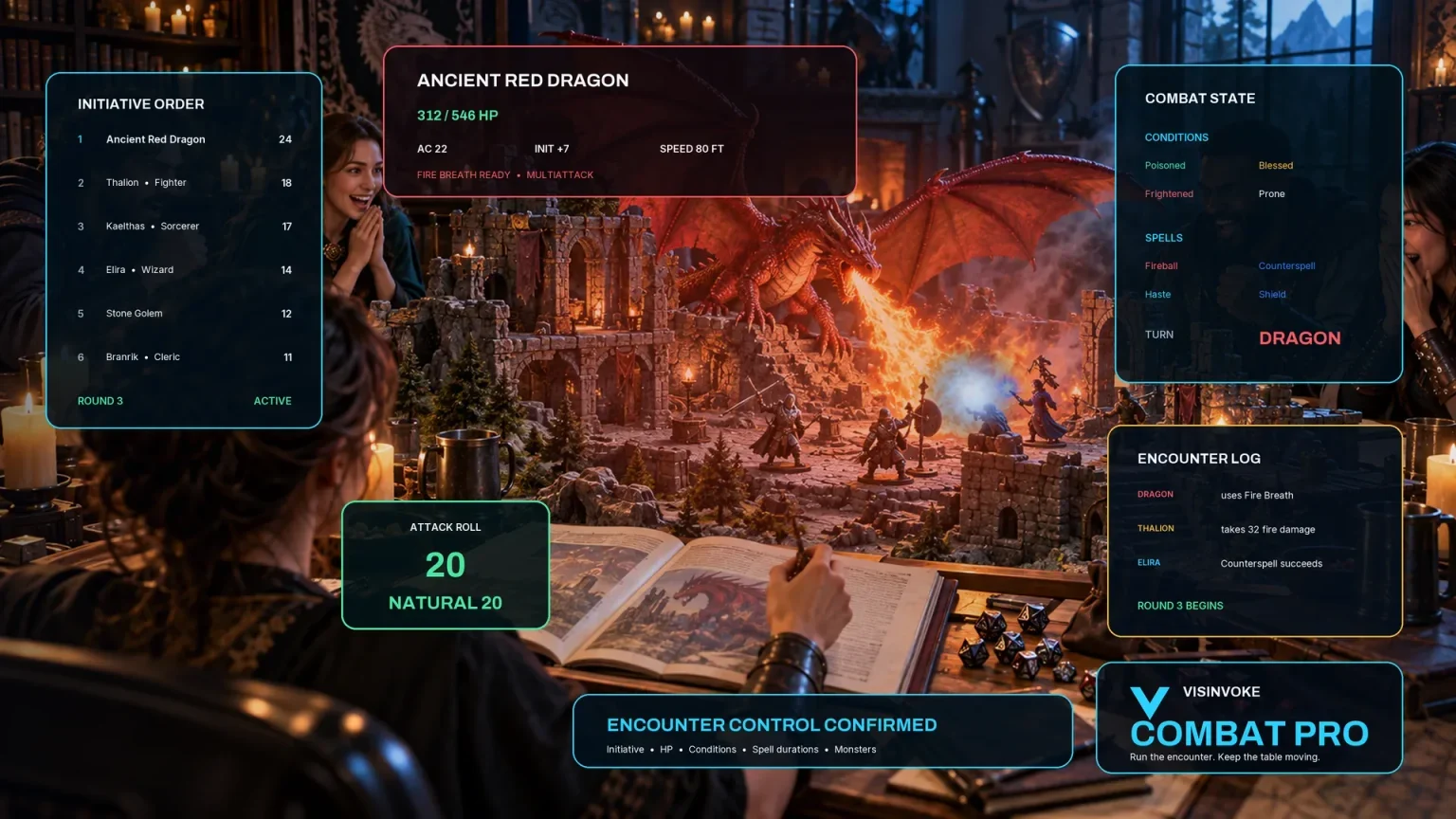
Use the dedicated encounter workspace for combat and keep the landscape account with your campaign references.
Artwork illustrates fictional landscapes and related products, not application screens.
Questions and answers
Places, signs, saved accounts and audience views at a glance.
The natural aftermath of one established party action in one place. Prepare playable landscape consequences, wildlife responses, affected people and threads the party can follow.
Give the place description with its name first, name party members, describe the established action, then choose reach and tone. The result uses the first two party names supplied.
Blight, overgrowth, creature migration, changed waters, strange weather, bold predators, wild magic and healing. Set the first signs and choose one of six scales to suit the story.
Place, party, action, reach and tone; the natural change and first signs; landscape signs, creature responses, affected people, duration and meaning for the party; how the wild treats them, two hooks, two practical tips and a private note.
Edit or reroll individual sections, lock favourites, save earlier versions, duplicate records and add tags or notes. Choose Dungeon Master or player copy, JSON or print. The player account omits private notes and Dungeon Master context; review the selected material before sharing.
Open the Generators collection in Desktop Control Centre on Windows through your VISINVOKE account. Review individual subscription access and current pricing in your account. A free account is separate from paid generator access.
Continue in VISINVOKE
Create a free VISINVOKE account or sign in to your existing account. Get Desktop Control Centre through your account installer page.
Open the Generators collection on Windows. Review current subscription and access details in your account.